
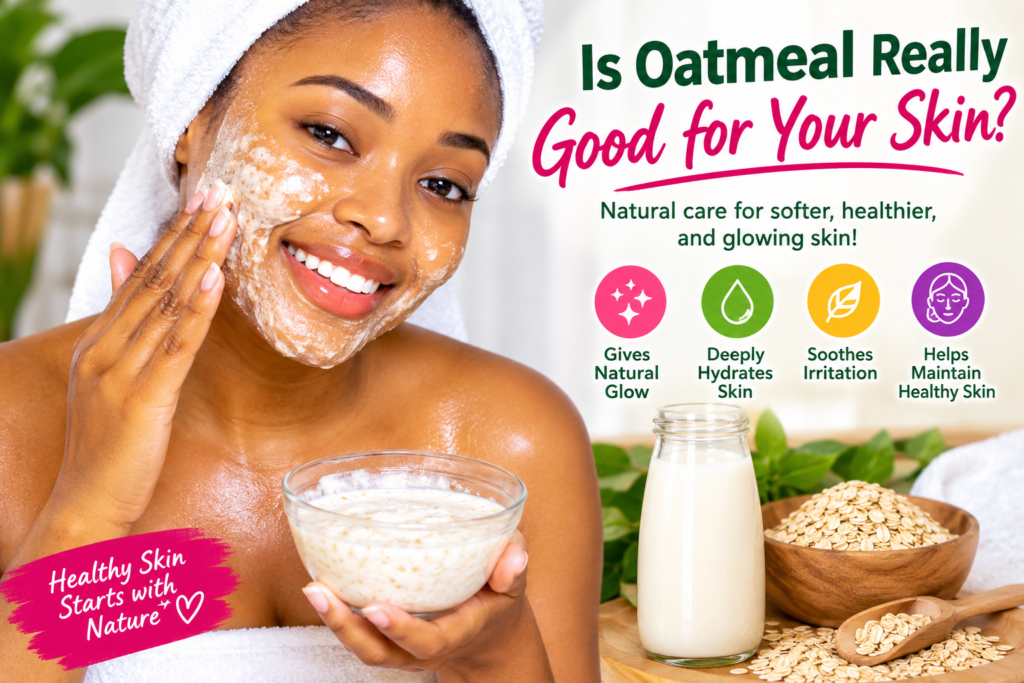
Is Oatmeal Really Good for Your Skin?
Or Is This Natural Remedy Overhyped?
💡 Affiliate Disclosure: This post may contain affiliate links. As an Amazon Associate, BeautyTrendsz.com earns from qualifying purchases at no additional cost to you.
I was used to staring at my humble tub of rolled oats sitting there on my food store shelf as nothing else than a quick fix breakfast on any of my formal mornings. But this changed a couple of years back when a surprising flare up of dry skin that was still irritating left my face feeling itchy, and somewhat tight.
I became so anxious and kept looking for a gentle remedy, something homemade or natural, and that is when I went for a handful of oats and put them in a bowl of warm water to make a smooth paste and then started applying it gently on my cheeks, round and round and all over my face. Of course, with a lot of hope and trust that this natural skin care remedy would get rid of my skin problem.
Just to put things into perspective, it is good to note that oatmeal, ‘Avena sativa,’ is a nutrient-dense whole grain rich in starch, beta-glucans, lipids, and unique antioxidant properties referred to avenanthramides. In beauty and skin care, people depend on oatmeal as a natural emollient, a mild physical exfoliant, and a soothing natural remedy for dry skin, reactive skin, or eczema-prone skin.
In this entire blog post, we will be discussing oatmeal and how its natural properties may be useful to your skin, including the actual scientific facts and evidence surrounding oatmeal and its effects on your skin and scalp. As well, this article will touch on do it yourself ‘DIY’ recipes and look at the possible risks of oatmeal on your skin. This article will still dig deep into the comparison or similarity of natural or homemade oatmeal versus topical or cosmetic oatmeal cream or serum extracts also known as commercial product formulations.
A realistic note before we start off: even as oatmeal is one of the best natural remedies for skin conditions, while at the same time supporting your skin barrier, it is not a magical solution for chronic skin conditions like skin acne or other related skin blemishes. Oatmeal cannot also get rid of deep skin wrinkles or reverse aging or hair loss. At the same time, oatmeal cannot replace dermatological skin care products. However, it is more realistic to expect mild skin soothing, increased skin hydration levels, but not a dramatic skin change.
What Is Oatmeal?
Oatmeal is the processed type of oat grains picked from the Avena sativa plant. Oatmeal has been planted in the ancient times as a staple food crop, oatmeal has a long traditional history in natural or home-made wellness and skin care practices across Europe and North America, where warm oatmeal at baths were constantly used to soothe skin itching, skin irritations or inflammations, insect bites, as well as mild skin rashes.
In the present-day cosmetic chemistry, you will constantly come across colloidal oatmeal. However, contrary to the typical rolled or steel-cut kitchen oats, colloidal oatmeal is formed by crushing whole oat kernels into really fine powder. As a result, this super tiny powder floating in liquid solution enables the grain’s natural proteins, lipids, and starches to be spread consistently all over your skin.
Key characteristics that make oatmeal particularly suited for topical skin care
- Beta-glucans: Polysaccharides that hydrate or moisturize your outer skin layers.
- Lipids and Fatty Acids: Natural bodily oils that help strengthen your skin’s lipid barrier to ensure all the skin moisture is locked in for long.
- Avenanthramides: A set of special phenolic antioxidants found mostly in oats, which aid in getting rid of skin irritation or skin itching.
- Saponins: Naturally occurring plant properties and extracts that play the role of gentle skin cleansers that work through the absorption of excess sebum and skin dirt.
Potential Benefits of Oatmeal for Skin
May Help Soothe the Skin
Whenever your skin feels itchy, tender or generally inflamed, applying an oatmeal-based paste or soaking in a colloidal water bath will more or less bring some relief to your skin. Extracts from oatmeal, such as avenanthramides, help stops the skin’s signals of causing inflammation on your skin, further reducing skin redness or tenderness. This anti-inflammatory properties of oatmeal helps reduce skin itching effects brought about by sun burns and harsh winter conditions.
May Support Skin Moisture
Oatmeal is a natural product that works like a humectant and an emollient because of its starch and moisture-binding beta-glucan properties help to make your skin moisturized or rather hydrated. equally, oatmeal’ lipids are essential in creating a protective layer of the surface of your skin. This also helps in lowering of the loss of trans epidermal moisture loss in your skin ensuring that your dry skin remains hydrated for the longest time.
May Help Improve the Appearance of Sensitive or Flare-Prone Skin
If you are always forced to deal with uneven skin texture, mild skin flakiness or skin redness, oatmeal will leave your skin extra smooth by exfoliating your skin. This works when you apply a smooth solution or paste of raw oat flour in a special liquid, gently on your skin, round and round, leaving your skin extra smooth and with dead skin cells removed without leaving micro tears on your skin.
This exfoliation process, when repeated gently and occasionally , helps give your skin a smooth texture and furthermore, improves your general body appearance.
Potential Benefits of Oatmeal for Hair
How It May Benefit the Scalp
One important thing to note is that the scalp is an extension of your facial skin and on this note, the scalp experiences more or less the same skin challenges like that of your face or general body. You will notice that sometimes when your skin faces skin dryness or flakiness, your scalp may also experience dryness. Equally, your scalp may be inflamed or have redness too just as your body skin.
Applying oatmeal paste on your scalp may also help ease skin itching and help with skin flakiness that come from skin dryness.
Oatmeal’s saponin properties help break down tough skin build up and excess sebum without necessarily removing the scalp’s moisture.
How oatmeal May Benefit Hair
When you apply oatmeal as a rinse or conditioning mask, the oatmeal past or liquid solution covers your hair with light protein and also hydrates the scalp with moisturizing carbohydrates. The thin layer of oatmeal solution covers your dry hair and scalp, leaving your hair and scalp extra smooth and easy to comb your hair or brushing it through. it also lowers the rate of friction on your scalp and hair, further, increasing scalp elasticity and adds a soft natural shining luster to dull and tough hair strands.
Who May Want to Try oatmeal on their scalp?
Oatmeal for scalp treatment is a lot more effective on a dry scalp and that is itchier. Oatmeal solution also works best on delicate or fine hair that that gets even damaged by heavy hair oils. Equally, oatmeal creams or solutions may be beneficial to people who are sensitive or allergic to traditional or conventional cosmetic products or topical skin care/scalp products.
What Does the Research Say About Oatmeal?
Contrary to other trendy topical or cosmetic products that depend a lot on marketing claims, surprisingly, oatmeal has some sufficient scientific evidence and backing to support its efficiency on your skin and scalp.
The US Food and Drug Administration (FDA), certifies colloidal oatmeal as a safe and effective skin protectant.
Key clinical findings include:
- Human Clinical Trials on Barrier Repair: studies on people show that topical formulations that contain 1% colloidal oatmeal makes immense improvement of skin moisturization, lower levels of scaling and roughness, and lower eczema severity scores.
- Microbiome and pH Support: Clinical studies published in dermatological journals demonstrates that colloidal oatmeal aids in normalizing surface skin pH (which often inclines to the alkaline levels when you get eczema flare-ups) and supports a balanced skin microbiome by preventing harmful bacteria such as Staphylococcus aureus.
- In Vitro Studies on Avenanthramides: Laboratory and cell culture research findings ascertain that oat-derived avenanthramides directly prevent or bars the secretion of pro-inflammatory cytokines and histamine, offering a molecular foundation for the grain’s anti-itch properties.
Even as evidence and facts for colloidal oatmeal in controlled formulations is significant, researchers identifies that natural kitchen oat solutions differ in concentration and the size of the particles, implying that natural remedy preparations may attain somewhat unclear, inconsistent outcomes as compared to pharmaceutical-grade topical products.
How to Use Oatmeal for Skin
Preparing a good oatmeal treatment solution is supposed to be easy and straight-forward.
- Get your oatmeal well prepared by Grinding them in a clean blender or spice grinder to the point when they turn into an exceedingly fine, flour-like powder.
- Mix with liquid: mix 2 tablespoons of this finely-grounded oat powder with 1 to 2 tablespoons of warm (but not hot) distilled water or floral hydrosol until you reach a smooth puree-like paste forms.
- Cool the paste to safe temperature: Make sure the puree is lukewarm or at room temperature to prevent any likely irritations to an easily irritated sensitive skin.
- Apply the oatmeal paste gently: Spread an even layer over clean skin surface by using soft round and upward motions. Avoid getting paste into the eyes.
- Take a good rest: give some time for the oatmeal treatment to sit for about 10 to 15 minutes. Do not allow it to dry until it turns out to be rock-hard or cracking.
- Rinse and moisturize: Splash with clean lukewarm water, while gently massaging to rinse away, pat skin dry with a soft towel or a clean piece of cloth, and instantly apply your ordinary facial moisturizer.
How to Use Oatmeal for Hair
FOR YOU TO APPLY OATMEAL INTO YOUR HAIR AND WITHOUT LEAVING OATMEAL FLECKS STACK RIGHT IN YOUR HAIR STRANDS, YOU SHOULD TRY USING OATMEAL MILK RINSE, WHICH HAS THE OATS FILTERED OUT. Do The following:
- Simmer the oats: mix 1/2 cup of plain rolled oats with 2 cups of clean water in a tiny bowl . Bring to a low simmer for 5 minutes until the liquid turns creamy and opaque.
- Filter properly: Pour the mixture through a filter of your choice, but one that is super fine, or a fine mesh filter into a small bowl or container of your choice, putting some pressure to extract the smooth, silky oat milk while discarding all solid oatmeal grains.
- Cool it down: give the liquid some time to cool down to room temperature.
- Apply to your hair after shampooing: Pour the oatmeal milk over your scalp and hair length immediately after washing your hair and scrabbing your scalp with your fingers gently. Massage the oatmeal milk gently into the scalp for about 2 to 3 minutes.
- Rinse your hair and scalp out: Rinse your hair and scalp thoroughly with cool water and condition as you prefer or you always do.
DIY Oatmeal Beauty Recipes
1. Simple Soothing Oatmeal Face Mask
- Ingredients: 2 tbsp fine colloidal or home-ground or natural oat powder, 1 tbsp plain unsweetened yogurt, 1 tsp raw honey.
- Preparation: Whisk or mix by whipping with a special mixer or spoon all ingredients in a clean bowl to the point where it turns out smooth.
- How to Apply: Smooth over clean facial skin. Leave for 12–15 minutes.
- Frequency: 1 to 2 times weekly.
- Who Should Avoid: people with dairy allergies (substitute yogurt for warm water) or known bee product sensitivities.
2. Gentle Oatmeal & Water Cleansing Paste
- Ingredients: 1 tbsp fine oat flour, warm water.
- Preparation: Mix equal parts flour and warm water in your palm to create a smooth slippery paste.
- How to Apply: Massage onto damp skin in gentle round and round motions for 30–60 seconds, then rinse with clean water.
- Frequency: Daily or every other day as a gentle yet simple morning cleanser.
- Who Should Avoid: Any person actively experiencing broken skin or severe open acne lesions.
3. Calming Oat & Chamomile Scalp Soak
- Ingredients: 1/2 cup finely ground oats, 1 cup freshly brewed chamomile tea (chilled).
- Preparation: Mix ground oats into cooled chamomile tea, let steep for 10 minutes, then strain out all solid particles through cheesecloth.
- How to Apply: Pour the strained distillation directly onto your scalp, massage lightly, let sit for 10 minutes, then rinse out cleanly with clean water.
- Frequency: At least Once a week.
- Who Should Avoid: people with established allergies to plants in the Asteraceae family (like chamomile or ragweed).
How Often Should You Use Oatmeal?
Knowing how often you should use or apply oatmeal is pegged mostly on your skin type, some concerns, how best you want to use or apply the product on your skin:
- Sensitive or Dry Skin: A gentle colloidal oatmeal soak or soothing mask can be used 2 to 3 times per week. Formulated commercial colloidal creams can mostly be applied on a daily basis.
- Oily or Combination Skin: Plain oatmeal pastes applied as a gentle skin cleanser can be applied 3 to 4 times a week to aid in absorbing surface lipids without getting rid of the skin barrier.
- Exfoliating DIY Blends: If your DIY recipe entails added physical exfoliants (like sugar, coffee grounds, or coarse grains), limit apply to once a week to bar micro-tears and affecting your skin’s moisture barrier.
Pay attention to your skin—if you determine tight skin or mild dryness or flakiness, reduce the number of times you use the product.
Possible Side Effects and Risks of oatmeal
Even though oats are somewhat safe and commonly endured by many people on their skin, it is always important to mention that no natural remedy or ingredient is 100% risk-free. You should expect the following:
- Skin Irritation or Contact Dermatitis: People sensitive to proteins found in oats may encounter some skin redness, skin itching, or tiny hives.
- Gluten Cross-Contamination risks: Even as pure oats are naturally gluten-free, they are constantly processed in facilities that handle wheat, barley, and rye. People with severe Celiac disease or gluten hypersensitivities may need to search for certified gluten-free oats or commercial colloidal oatmeal.
- Dryness from Over-Exfoliation: applying coarse, inappropriately ground oats on a daily basis may act like sandpaper on delicate skin, affecting the lipid barrier and causing increased skin redness and skin dryness.
- Clogged Drains: Straining or sieving with a sieve kitchen DIY treatments is important . Unstrained or unfiltered oat pastes rinsed down sink drains can easily bring about plumbing blockages.
Who Should Avoid Oatmeal?
- People with well diagnosed and established Oat Allergies: Any person with a diagnosed allergy to Avena sativa may need to avoid topical oats entirely.
- People with Severe Open Wounds: You must never apply raw home-made or natural kitchen-grade oat pastes to deeply broken skin, open sores, or weeping eczema, as non-sterile food particles can cause the spread or growth of harmful bacteria.
- People with Unmanaged Severe Dermatological Conditions: even as colloidal oatmeal aids in soothing mild to moderate dry skin, severe skin diseases need medical assessment and prescription treatment from a board-certified dermatologist.
Patch Test: How to Test Oatmeal Before Using It
It is advisable to always carry out a skin patch test before applying a full-face mask or plunging into an oatmeal bath. Follow he following steps to apply a path test the right way:
- Apply a small amount of oatmeal formulation: prepare a good blend or mix of a small pinch of oat powder with water and dab a small amount onto a clean patch of skin on your inner arm or behind your ear.
- Wait and observe: Leave the oatmeal paste on for about 15 to 20 minutes, then rinse it off with clean water. Take time to observe the skin area for about 24 to 48 hours.
- Observe your skin for any skin reactions: Look for any traces of skin redness, inflammation, burning, or itchiness.
- Continue or go on safely: In case the patch skin area remains calm and clear, the ingredient may be termed as generally safe for wider use . It is advisable to stop immediately if you see any traces of skin reaction.
Oatmeal vs. Commercial Skincare Products
| Feature | Raw Kitchen Oatmeal (DIY) | Commercial Colloidal Skincare |
| Ingredient Structure | Whole ground grains with variable particle sizes | Micronized colloidal oat powder (USP grade) |
| Formulation Stability | Must be used immediately; spoils within hours | Preserved for long shelf-life and microbial safety |
| Concentration Control | Varies widely per batch | Standardized active percentages (e.g., 1% colloidal oat) |
| Cost | Extremely low / affordable | Moderate to high price point |
| Scientific Testing | Unprocessed home remedies rarely tested in clinical trials | Often dermatologically tested for safety and efficacy |
Common Myths About Oatmeal
Myth: Oatmeal permanently cures eczema and acne.
- What We Know: Colloidal oatmeal is one of the best skin protectants that aids in managing eczema symptoms like skin itching, skin redness, and skin dryness. Moreover, eczema and acne are intricate, chronic skin conditions pushed by genetical factors, immune responses, and hormonal factors. Oats soothe symptoms; they do not change your genetics or cure chronic skin conditions.
- The Safer Approach: Apply oat-based products to make your skin feel comfortable even as you consult a medical professional for long-term treatment approaches.
Myth: Kitchen rolled oats work the same as pharmaceutical colloidal oatmeal.
- What We Know: ordinary rolled oats ground in a home blender are known to be meaningly larger than USP-grade colloidal oatmeal powdered particles. Large particles do not remain floated in liquid as well and do not create similar even film over the skin.
- The Safer Approach: find pleasure in DIY oat masks for gentle, temporary moisturization, however, choose approved and recommended OTC colloidal oatmeal products when aiming to treat extreme skin dryness or eczema.
How to Choose the Right Oatmeal Product
When buying oats or oat-infused topical or commercial products, take into account the following tips:
- Check the Label: Look for “Colloidal Oatmeal (Avena sativa)” listed as an active skin protectant ingredient.
- Avoid Added Fragrances: Synthetic or aesthetic perfumes can cause skin reactions in sensitive skin, dampening the reason for using a soothing oat treatment.
- Select Unflavored for DIYs: If you intend to buy kitchen oats to grind at home, make sure to pick 100% plain rolled or whole oats. Stay clear of instant oats with added sugars, aesthetic flavorings, or preservatives.
- Look for Standardized Percentages: Commercial eczema creams mostly indicate their exact colloidal oatmeal percentage content (typically 1% to 2%).
Frequently Asked Questions About Oatmeal
Can I use oatmeal on my face every day?
Yes, you can apply colloidal oatmeal on your face on a daily basis in case it is formulated into a gentle commercial moisturizer or gentle cleanser. Moreover, in case you are applying raw, home-ground oat pastes as a physical scrub, daily use might lead to light over-exfoliation and minor barrier irritation. For DIY mixtures, reduce or control how you do physical scrubbing to 2 or 3 times a week, whereas, lightweight oat-infused hydration or moisturizing sprays or standardized lotions may easily be used on a daily basis to dry or sensitive skin types without any issues at all.
What happens when a person eats oats daily for 30 days?
Eating or consuming oats on a daily basis for 30 days offers great dietary values that indirectly support skin health. Oats carry or contain soluble beta-glucan fiber, which supports healthy digestion, helps regulate blood sugar spikes, and helps in maintaining healthy cholesterol levels. A healthier digestive system and stable blood sugar levels may help lower systemic inflammation all through the body. Even as consuming oats supports your skin from the inside, it may not help attain similar instant local anti-itch or barrier-coating effects that using colloidal oatmeal directly onto irritated skin offers.
Does oatmeal make your skin glow?
Oatmeal can help your skin appear somewhat more glowing; however, it may not physically change skin pigment or generate immediate structural changes. Its mild exfoliating properties get rids of dead skin cells that cause dullness, while its natural fats and moisture-binding beta-glucans moisturize the outer epidermal layers. This mix of soft smoothing and skin’s surface moisturizing enables light to bounce off your skin more uniformly, leading in a healthy, natural, and well-hydrated glow instead of an oily shine.
Is it good to use oatmeal on my face?
Applying oatmeal on your face is somewhat safe, significantly valuable, and supported by wide dermatological research and findings. Oats have one of a kind anti-inflammatory antioxidants referred to avenanthramides, gentle cleansing saponins, and deep hydrating lipids that sooth skin redness and strengthens your skin’s natural barrier. Even if you always have occasional skin dryness, sensitive skin patches, or mild skin surface irritation, adding plain oatmeal masks or colloidal oatmeal creams in your natural skin care routine can offer gentle relief without the harshness of aggressive synthetic additives.
Can oatmeal help reduce acne and pimples?
Oatmeal may help soothe irritated skin and support the skin’s natural moisture barrier; however, it is not a proven or approved separate treatment for skin or face acne. However, its soothing ingredients may aid in lowering distress linked with skin irritation, oatmeal doesn’t dependably unclog pores or get rid of acne-causing bacteria. Whenever you have acne-prone skin, take into consideration these tips:
- Buy a gentle, fragrance-free skin cleanser containing colloidal oatmeal.
Stay clear of harsh scrubbing with coarse oatmeal, which may irritate inflamed scars also called pimples which may be Side effects of oats on face.
- Take into consideration proven facial or skin acne-fighting ingredients, for example salicylic acid or benzoyl peroxide, when suitable for your skin type.
Seek advice of a professional dermatologist in case your skin acne is chronic, painful, or leaving scars behind, some of the possible Side effects of oats on face.
Does oatmeal help remove dark spots and even out skin tone?
Oatmeal may boost the look of dull skin by aiding to moisturize and smooth its skin surface. Nevertheless, there is inadequate evidence that oatmeal only may get rid of dark face spots, melasma, or post-acne hyperpigmentation. For a smooth yet even-looking face, take into account the following:
- Apply a gentle or simple moisturizer to maintain your natural protective skin barrier.
- Apply broad-spectrum sunscreen with SPF 30 or higher in the day to help avert dark face spots from turning out to be darker.
- Take consideration of approved and tested ingredients for example niacinamide or azelaic acid for uneven and less smooth skin tone.
- Stay away from aggressive exfoliation or harsh homemade blends that may make pigmentation even worse.
Oatmeal is known to have the right ingredients that may form an essential part of your skincare routine; however, it must not be taken as a skin-bleaching or skin whitening which means never use oatmeal for skin whitening and this is indeed a wrong way of using oatgrass or any other related ingredient.
ingredient or a guaranteed dark-spot treatment.
Is oatmeal good for eczema and itchy skin?
Colloidal oatmeal may help lower skin itching, dryness, and mild irritation linked to eczema. It has skin-conditioning properties that help conserve moisture and support the natural skin’s protective barrier. Dermatology resources approve and recommend colloidal oatmeal as a valuable ingredient in products aimed and made for dry and irritated skin.
Pick or buy an appropriately prepared colloidal oatmeal cream or bath product.
- Apply the right skin moisturizer immediately after you have had a bath to help maintain moisture and prevent moisture loss.
- Stay away from hot water, harsh or strong soaps, and products that are fragranced that may make worse skin irritation.
- Seek professional medical advice in case your skin eczema is severe, getting even worse, or presenting signs and symptoms of skin infection.
Oatmeal may work or aid in managing symptoms, however, it doesn’t cure eczema or act as a complete replacement for prescribed treatment if need be.
Can I leave an oatmeal face mask on overnight?
Leaving a homemade or natural oatmeal face mask on overnight is essentially pointless and is also not compulsory. A short application may offer short-lived soothing and moisturizing benefits without presenting your skin to a long and protracted contact with a homemade or natural blend.
For a relatively safer application:
- Leave a simple and gentle oatmeal mask on your face for about 10–15 minutes, not unless the product instructions and guidelines states differently.
- Rinse properly with clean hand-hot water and pat your face dry with a clean towel or piece of cloth.
- Use a gentle skin moisturizer subsequently.
- Avoid sleeping with homemade or natural remedy masks containing food ingredients for example yogurt or honey, because these blends are not formulated or preserved for overnight application.
In case you wish to have an overnight skincare treatment, buy or pick a suitably formulated skin moisturizer made to remain on the skin.
What is the difference between colloidal oatmeal and regular oatmeal for skincare?
Colloidal oatmeal is designed by finely grinding oats into tiny particles that dissolve more evenly in water and skincare formulations. The normal or ordinary oatmeal, as well as rolled oats ground at home as a natural home remedy, may as well be used in gentle yet simple DIY treatments, however its particle size and evenness differ.
- Colloidal oatmeal: mostly used in formulated creams, body lotions, skin or face cleansers, and bath products or toiletries made to soothe dry or irritated skin.
- Common or ordinary oatmeal: An easy to find ingredient for homemade masks or natural face or skin remedies, even though coarse particles may irritate sensitive skin in case it is rubbed too strongly.
- Commercial oatmeal skincare products: mostly present steadier and even formulations and may entail extra moisturizing ingredients.
- Homemade oatmeal mixtures: may be prepared with hygiene and used without delay for the reason that they essentially fail to have the preservatives as seen in commercial facial or skin products.
For sensitive, eczema-prone, or consistently dry skin, a correctly formulated colloidal oatmeal product may be the best choice as compared with a natural or homemade oatmeal paste.
Final Verdict: Is Oatmeal Worth Trying?
Oatmeal stands as one of the most readily available, cost-effective, and one of the most scientifically proven natural skin and hair care remedy. Its high ability to soothe irritation, lock in moisture, and gently cleanse your skin or facial skin makes it one of the best additions to any basic beauty and skin care routine—specifically for people dealing with sensitive, reactive, or dry skin types.
Even as natural or raw kitchen oat masks offer a good, moisturizing DIY experience, anyone seeking targeted therapeutic relief for conditions like eczema should rely on standardized, over-the-counter colloidal oatmeal creams. You must take oatmeal as a comforting supportive step in your skincare routine instead of a direct treatment or cure-all, and your skin barrier will thank you.
Editorial & Medical Disclaimer
Disclaimer: This article is for general informational and educational purposes only and is not intended to diagnose, treat, cure, or prevent any medical condition. Individual responses to natural ingredients may vary. If you have a persistent skin or hair condition, severe allergies, or concerns about using a particular ingredient, consult a qualified healthcare professional or board-certified dermatologist.
